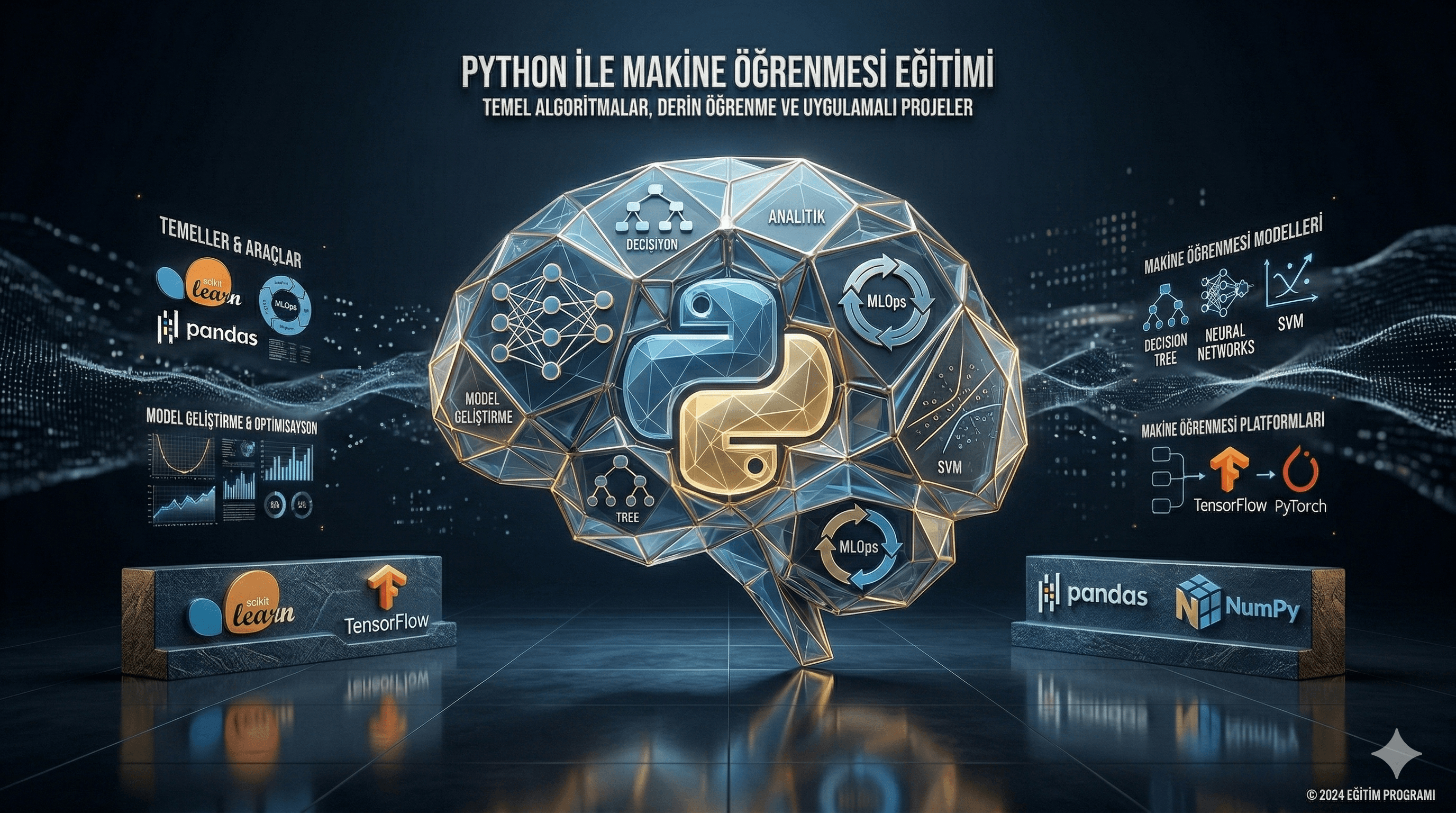
Applied Machine Learning with Python
Learn to develop algorithms that automate prediction, classification, and decision-making tasks by learning from data. Build, optimize, and deploy models into production using Python libraries.
About This Course
Learning Outcomes
Requirements
Course Curriculum
Course Introduction and Objectives
- Scope of the training content, objectives, learning outcomes, and expected acquisitions
- Explanation of the training methodology (theoretical lectures, interactive workshops, case studies, hands-on projects)
Definition and History of Machine Learning
- Historical development, evolution, and traditional approaches to machine learning
- Differences between classical ML and modern methods (excluding Deep Learning)
Core Concepts and Terminology
- Datasets, features, labels, train/test set splits
- Overfitting, underfitting, bias, variance, hyperparameters, cross-validation
Mathematical and Statistical Foundations
- Basic statistics: mean, variance, distributions, correlation
- Probability theory, regression, optimization, linear algebra, and basic calculus
Instructor

Şükrü Yusuf Kaya
AI Consultant & Instructor
Şükrü Yusuf KAYA is an internationally experienced AI Consultant and Technology Strategist leading the integration of artificial intelligence technologies into the global business landscape. With operations spanning 6 different countries, he bridges the gap between the theoretical boundaries of technology and practical business needs, overseeing end-to-end AI projects in data-critical sectors such as banking, e-commerce, retail, and logistics. Deepening his technical expertise particularly in Generative AI and Large Language Models (LLMs), KAYA ensures that organizations build architectures that shape the future rather than relying on short-term solutions. His visionary approach to transforming complex algorithms and advanced systems into tangible business value aligned with corporate growth targets has positioned him as a sought-after solution partner in the industry. Distinguished by his role as an instructor alongside his consulting and project management career, Şükrü Yusuf KAYA is driven by the motto of "Making AI accessible and applicable for everyone." Through comprehensive training programs designed for a wide spectrum of professionals—from technical teams to C-level executives—he prioritizes increasing organizational AI literacy and establishing a sustainable culture of technological transformation.
Frequently Asked Questions
Apply for Training
Boutique training with limited seats.
Pre-register for Next Groups
Leave your info to be the first to know when the next batch opens.
1-on-1 Mentorship
Book a private session.